

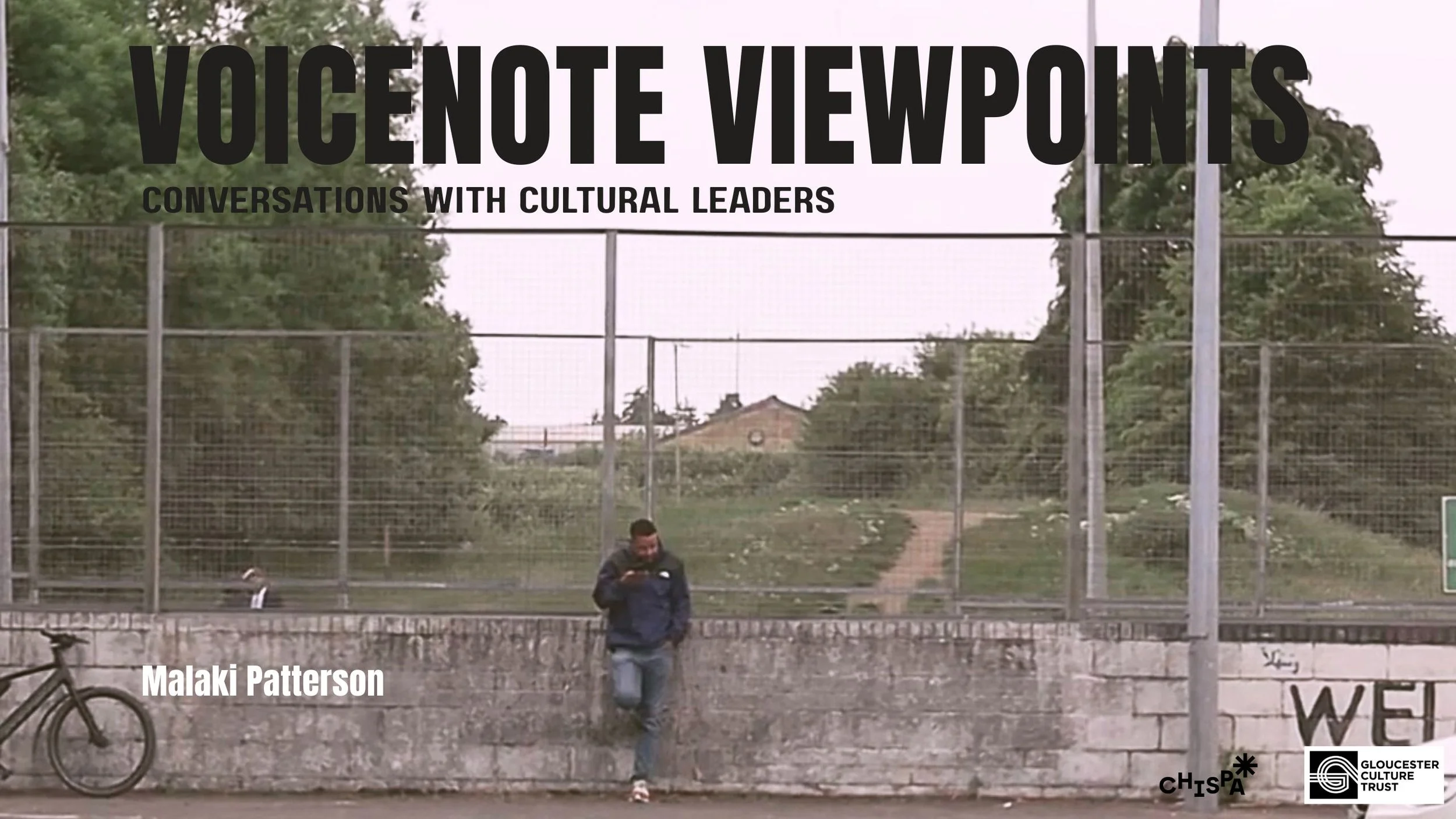
VOICE VIEWPOINTS
A youth-developed video podcast series exploring leadership, lived experience and the people shaping Gloucester.
Voice Note View Points began in 2025 when Gloucester Culture Trust (GCT) commissioned Chispa to develop a new online resource exploring leadership in Gloucester.
The original brief, then called Conversations with Leaders, was to create an accessible, conversation-based audio-visual resource that could offer useful insights into leadership for people across the city. Chispa was asked not only to produce an initial pilot, but to develop a format that could grow into an ongoing series of conversations with Gloucester’s leaders.
Developing the idea
As a youth-led organisation, we wanted the format to reflect Chispa’s approach and our commitment to bringing different and often underrepresented voices into conversations about our city.
The Chispa team started by asking who we think of when we hear the word leader. We were particularly interested in people who might not always be recognised as Gloucester’s “go-to” leaders, but whose work has had a real impact on people, communities and places over many years.
We also wanted to move away from the traditional interview format.
Inspired by slower, more reflective forms of storytelling, we developed Voice Note View Points: a format that combines the familiarity and informality of voice notes with long-form, observational video. Rather than creating another fast-paced piece of social media content, we wanted to make space for people to stop, listen and hear leaders talk openly about their experiences.
The questions are developed by the Chispa team and explore themes including what led someone to become a leader, the journey that brought them to where they are now, the pressures and highlights of leadership, what they have learnt along the way, and what they would like to ask or pass on to the next generation.
An important part of the concept is the relationship between the person asking the questions, the person behind the camera and the leader being interviewed. Wherever possible, there is a genuine connection between them. Chispa youth team members involved in the series often have first-hand experience of the organisations, communities or opportunities these leaders have helped to create.
Leadership in place
The format of the episodes takes in two different experiences. Each leader is filmed in a single location in Gloucester that has a connection to their story and leadership journey. While the Youth Leaders go on a journey through Gloucester while asking their questions and hearing the leaders reflections, until they reach the leaders where they are.
The setting becomes part of the conversation. Rather than sitting in a studio, we see people within the places where their leadership has developed, where their work happens or where they have made an impact and we see our future leaders walking towards them.
The slower, one-shot approach gives people time to think and respond without needing to produce the perfect soundbite. The voice note format also allows both the Chispa team and the leaders themselves to be more thoughtful, informal and sometimes stream-of-consciousness in their responses.
An evolving series
What began as an experimental pilot has now developed into a series, and Voice Note View Points is currently on its third episode.
With each new conversation, we are continuing to experiment with and develop the format. We are learning more about how the relationship between voice notes, people and place can create a different kind of leadership resource – one that feels personal and accessible while still offering meaningful insights that others can learn from.
Importantly, we don't want the episodes to end when the video finishes. Each conversation leaves audiences with questions and provocations of their own, inviting people to reflect on their experiences, think about the kind of leader they want to be and consider what leadership could look like for the next generation in Gloucester.
Ultimately, Voice Note View Points is about broadening our idea of who a leader can be.
It creates space to hear from people whose leadership is rooted in communities, relationships, lived experience and years of doing the work – and to capture some of that knowledge so it can be shared with the rest of the city.